SoundScope
2019 · interactive sound installation, data visualization, digital projection
SoundScope explores sound as a perceptual and spatial medium. Through two sets of experiments, it asks how people respond to different auditory environments — and how sound alone can construct the illusion of a place.
Experiment 1 · How sound moves people
Three participants were equipped with sensors and recorders to collect data on sound frequency, volume, and spatial deflection while their other senses were isolated. Every time a sound pulled their attention, the direction of that pull was captured.
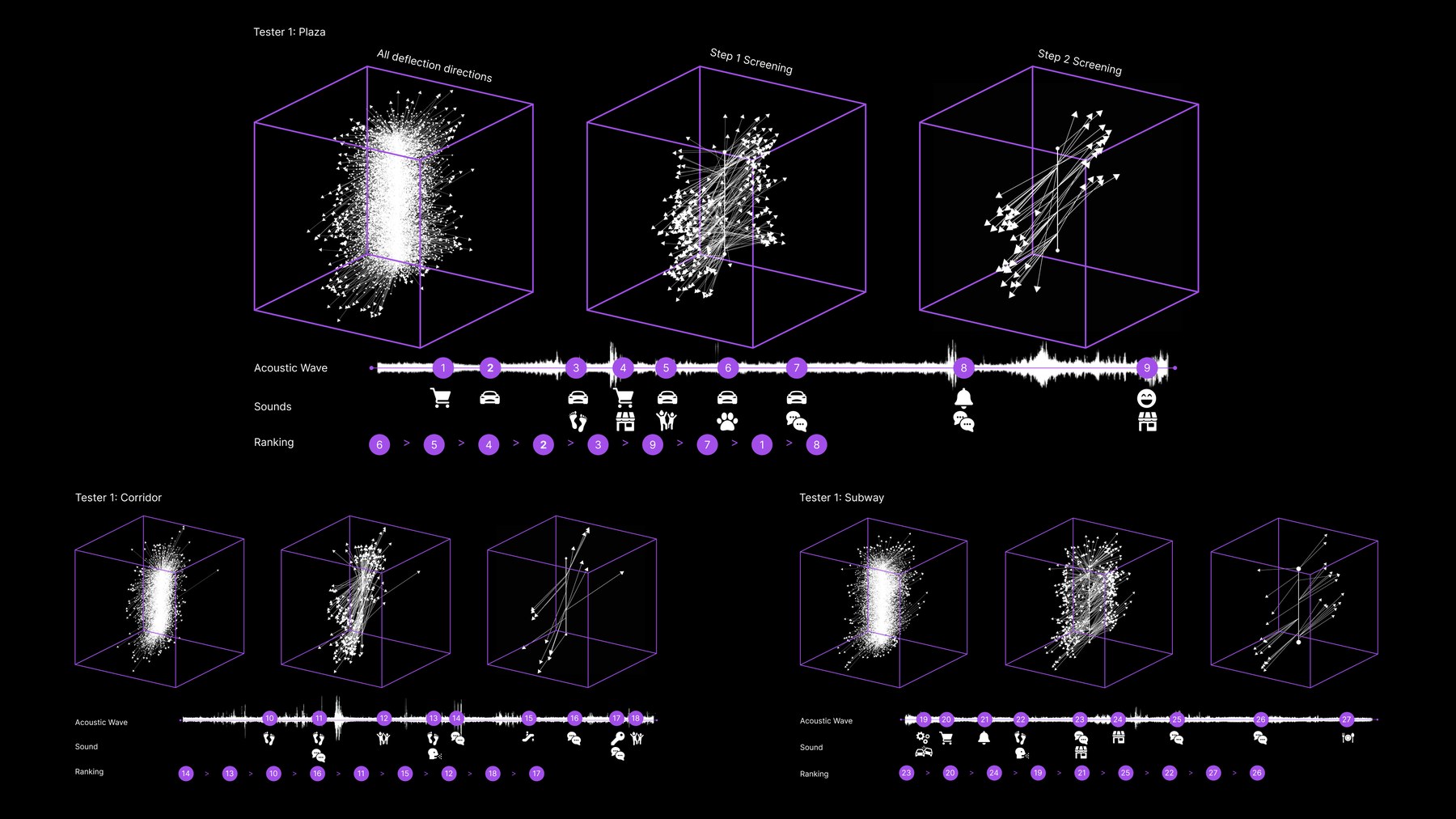
Tester 1 — deflection directions in a plaza, a corridor, and a subway, screened down to the strongest responses and mapped against the acoustic wave.
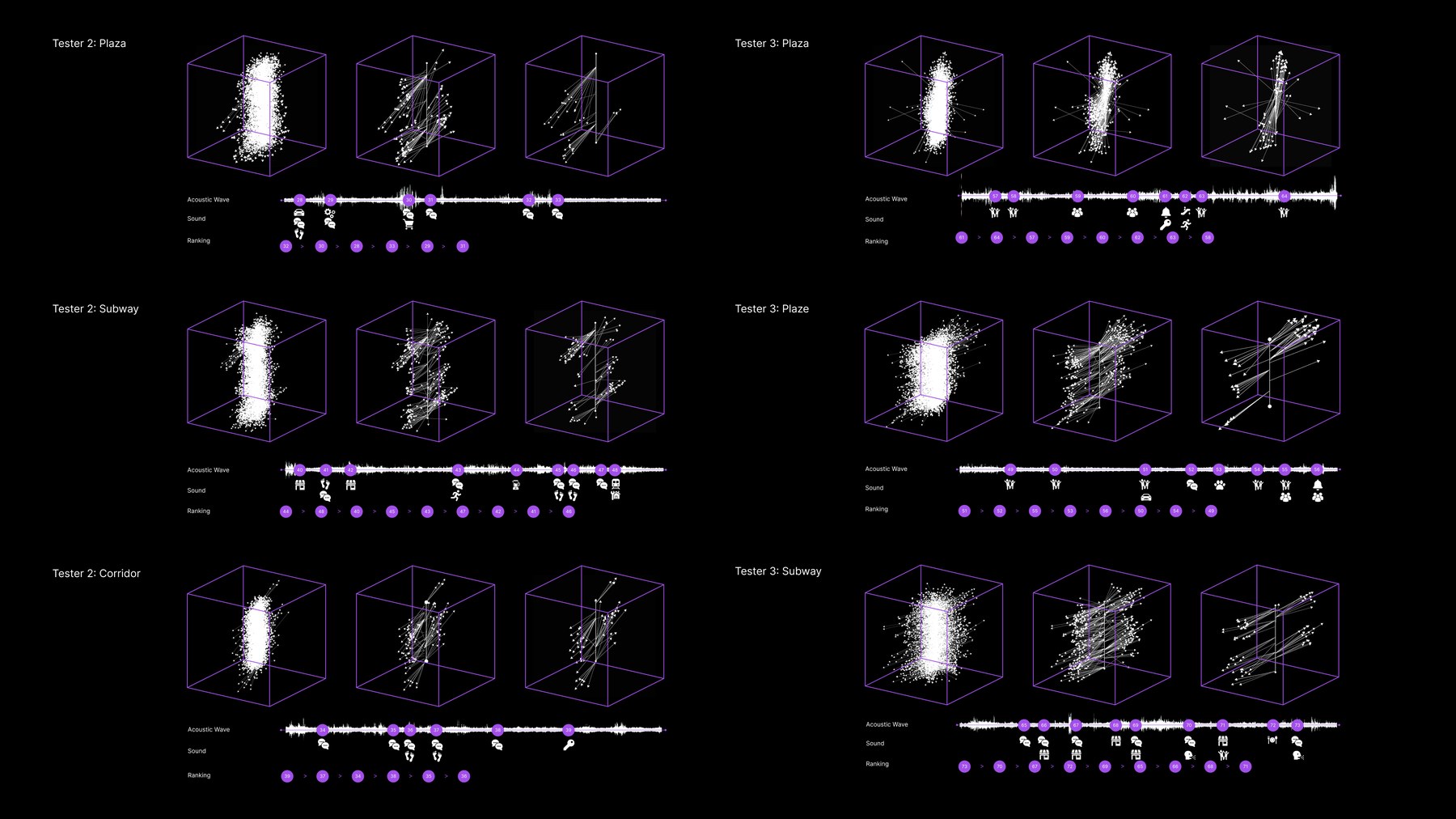
Testers 2 and 3, same three environments.
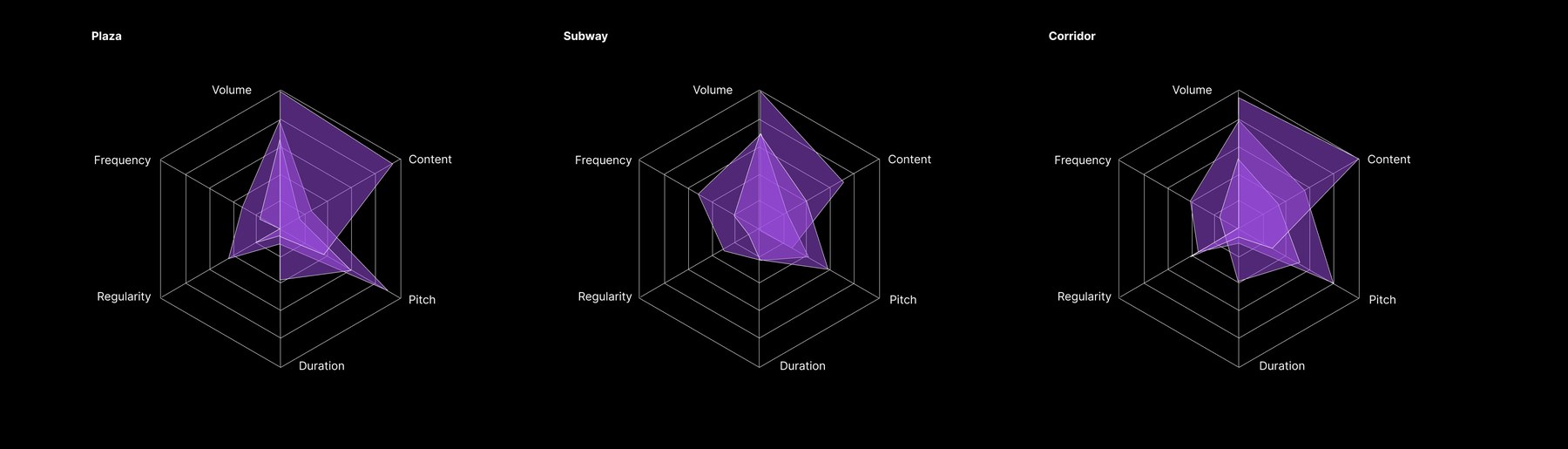
The result: each environment has a signature. Volume, content, pitch, duration, regularity and frequency compose differently in a plaza than in a subway.
Concept · From sound to illusion
Hearing is a chain of translations — air becomes vibration, vibration becomes nerve impulse, impulse becomes a sense of where you are. Somewhere along that chain, sound stops being information and becomes place.
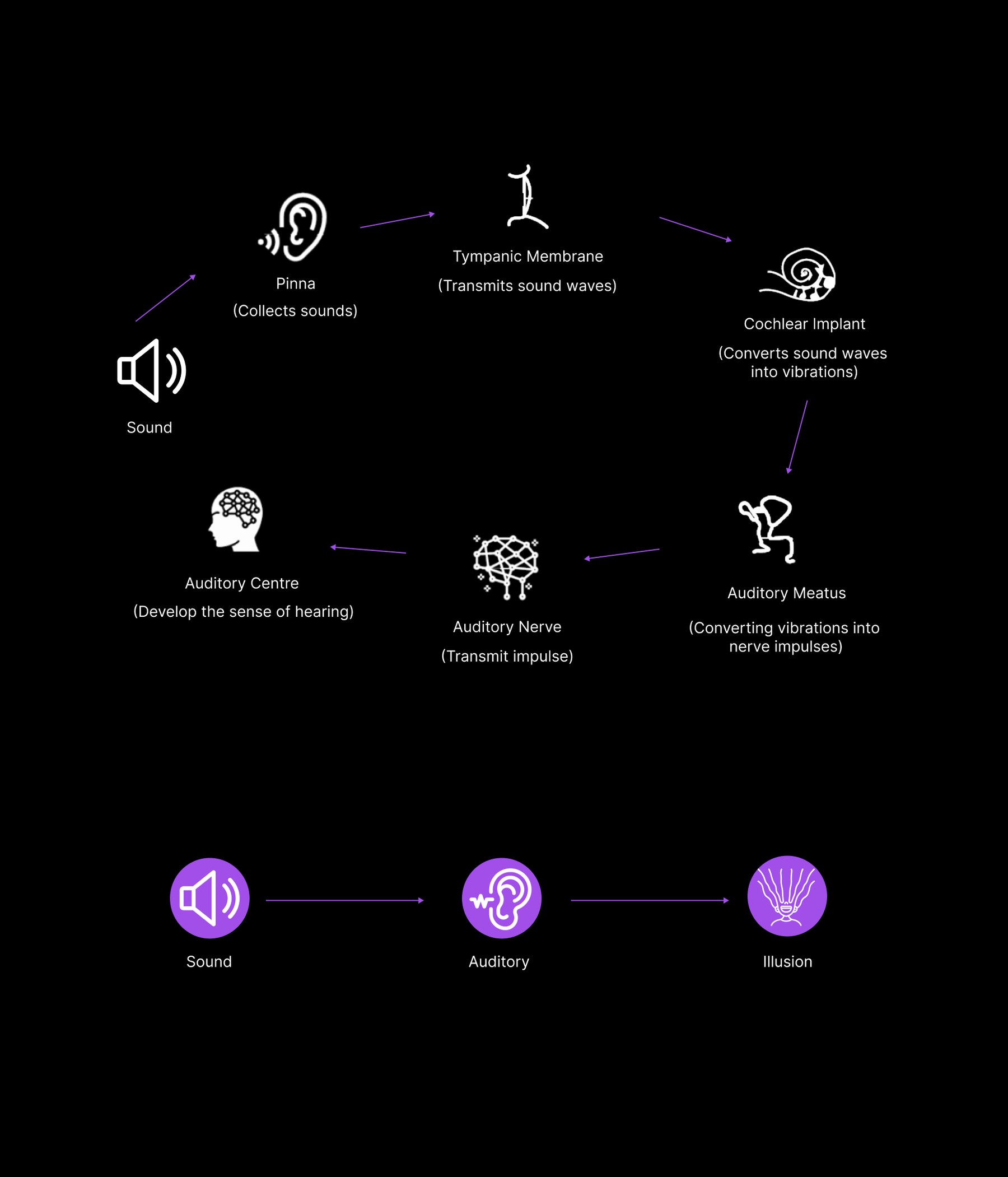
Sound → auditory → illusion.
Experiment 2 · Classifying 38 sounds
The second experiment applies k-means clustering to 38 recorded sounds across five dimensions — volume, pitch, regularity, frequency, duration — deliberately ignoring what each sound was. What emerged were eight sound types and four environmental categories: a taxonomy built on how a sound behaves, not what makes it.
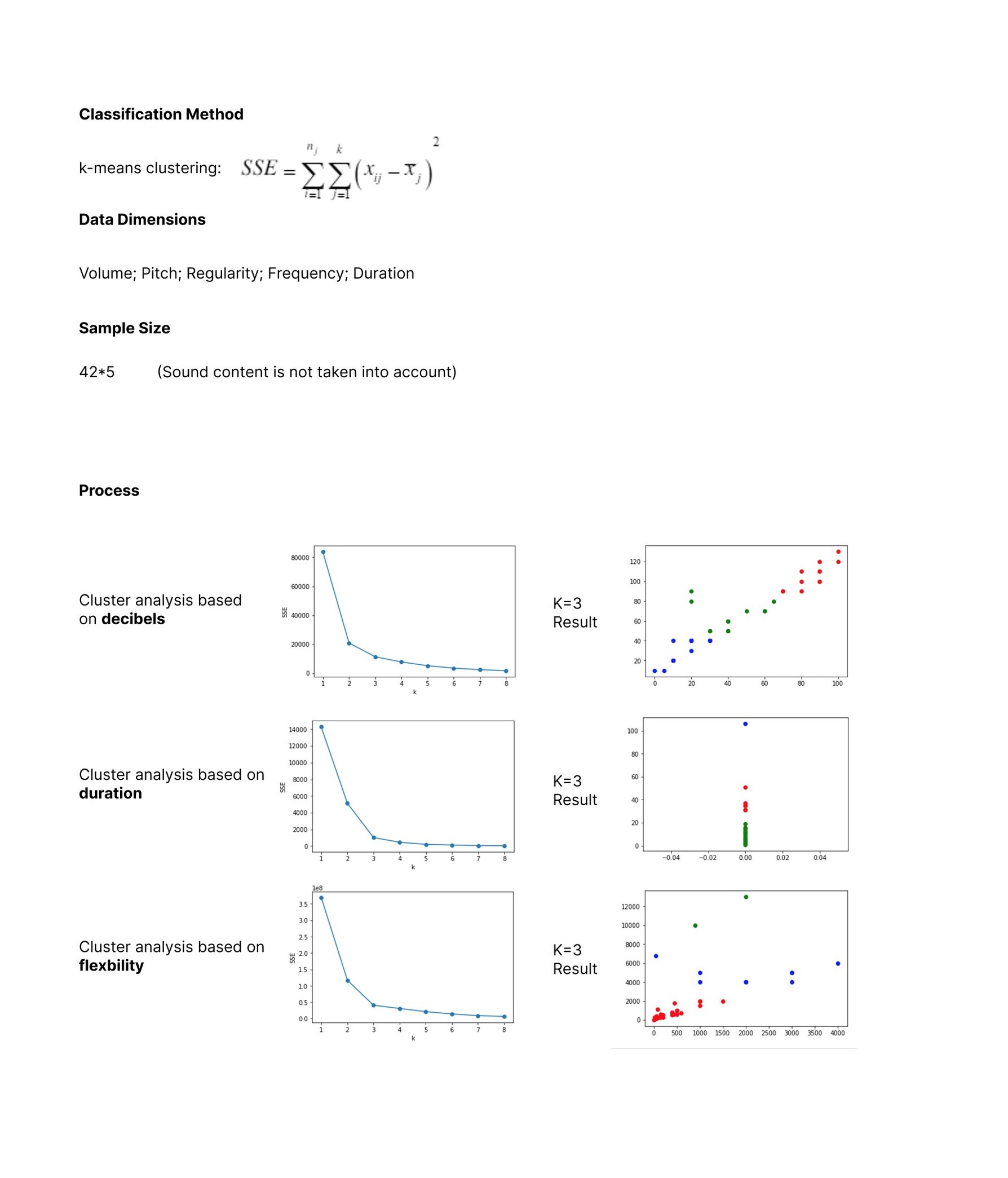
Method: k-means on 42×5 samples, clustered separately on decibels, duration and flexibility.
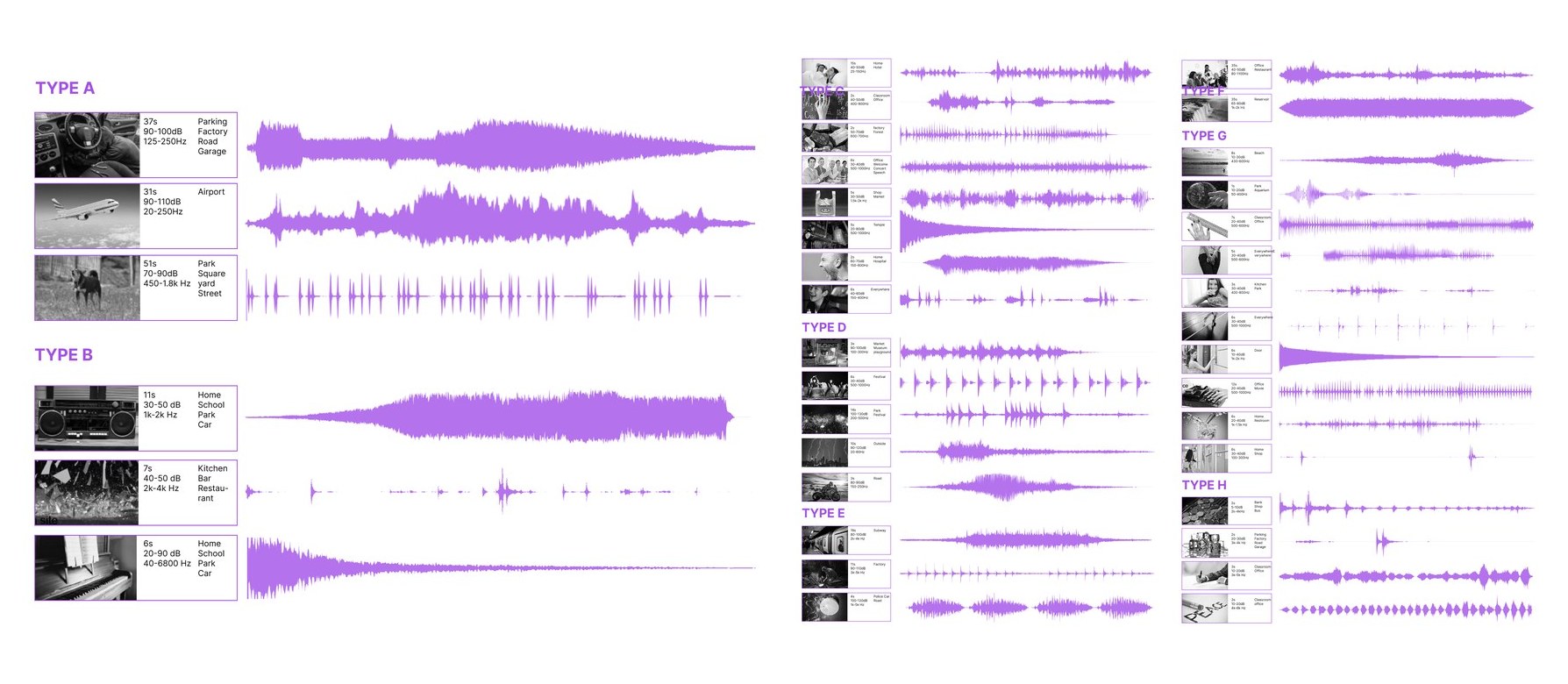
The resulting library — eight sound types, each with its duration, decibel range, frequency band, and the places it belongs to.
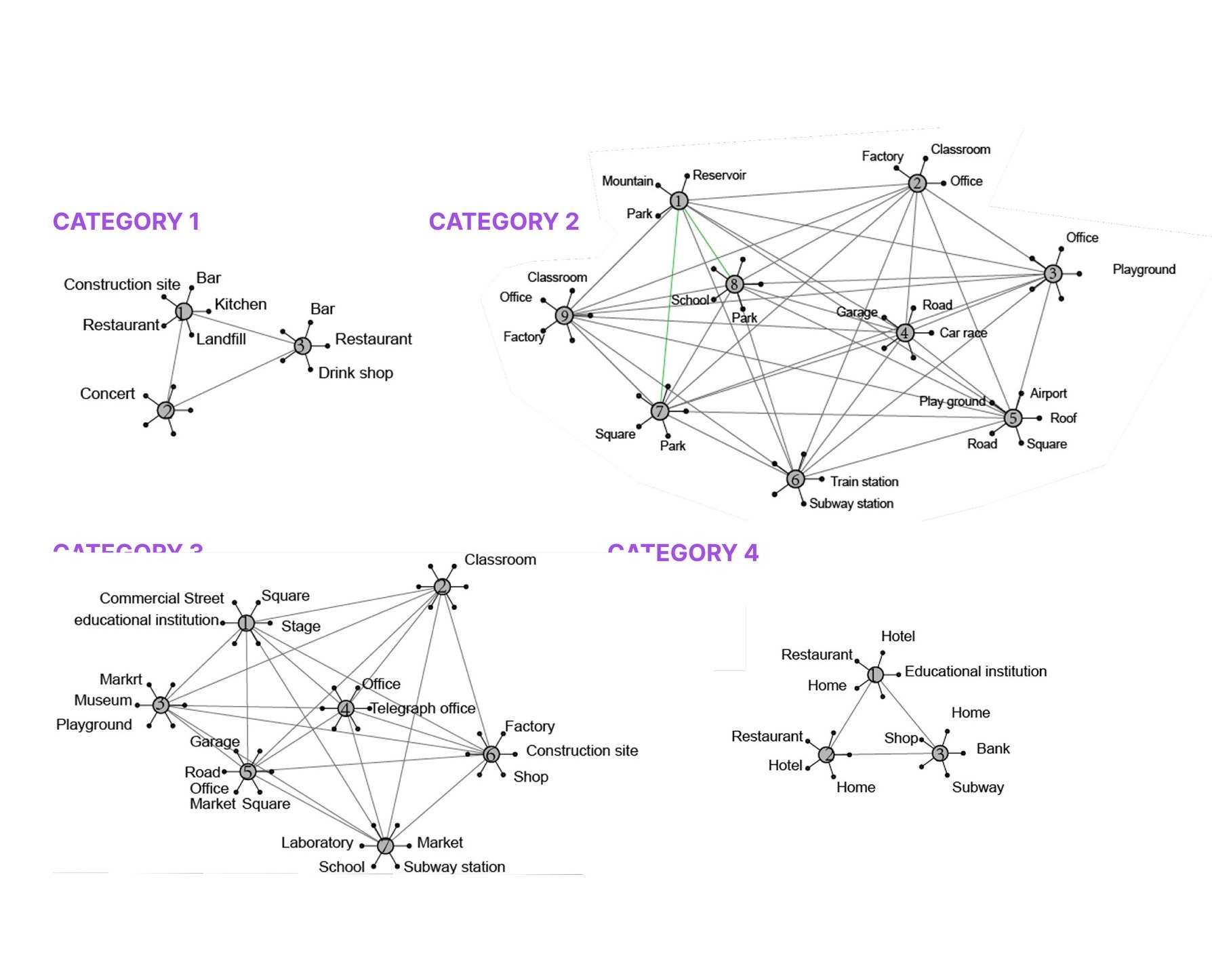
Four environmental categories, drawn as networks: which sounds keep showing up together, and where.
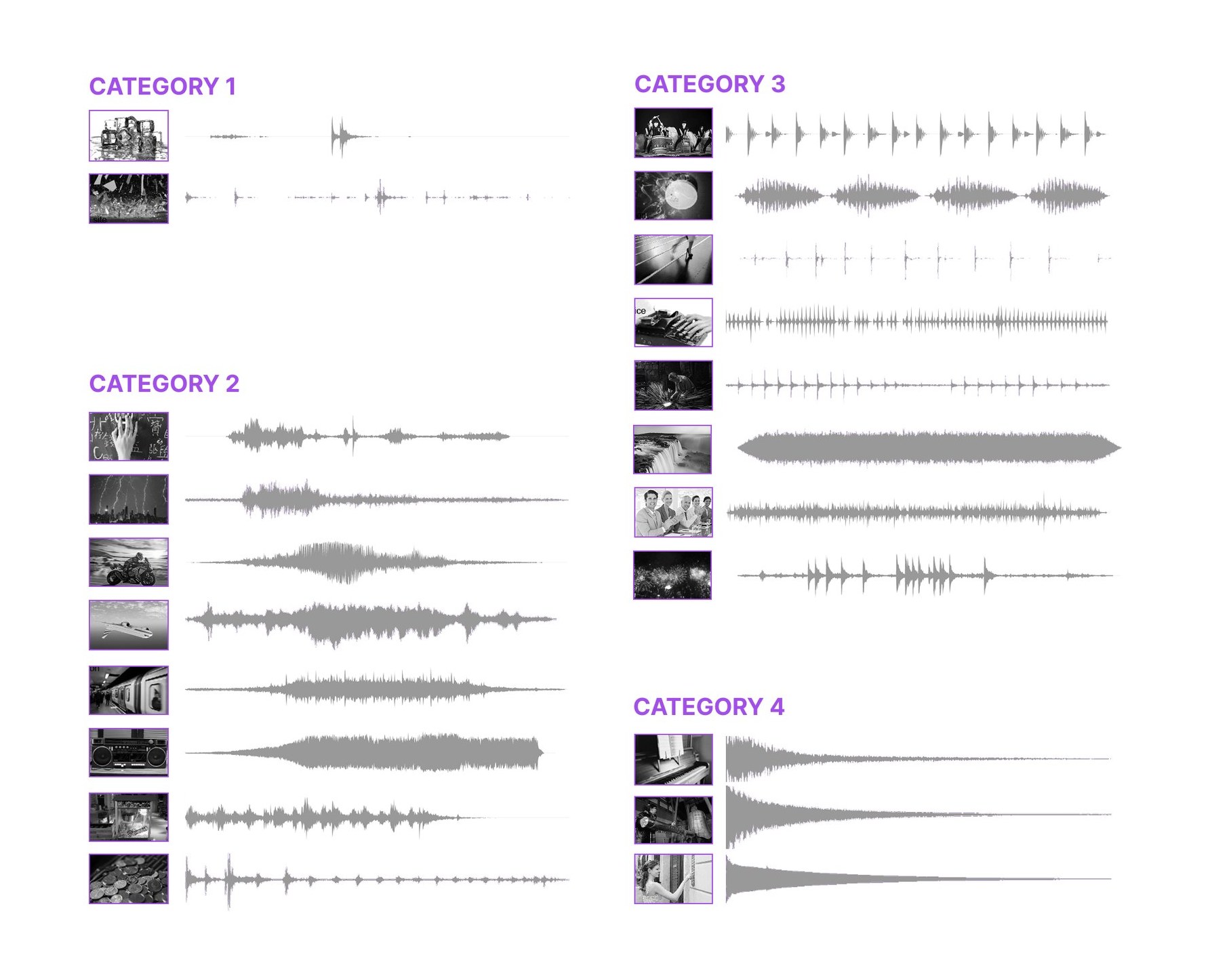
The same four categories with their sources. A sound belongs to a category by its shape, not its origin — which is what makes it a "non-place."
The installation
The final piece turns the analysis into four rooms you can stand inside — Distortion, Disorder, Nothingness, and Order — where the visualized soundscapes move as shifting light and waves, merging hearing and vision into a single sensory illusion.
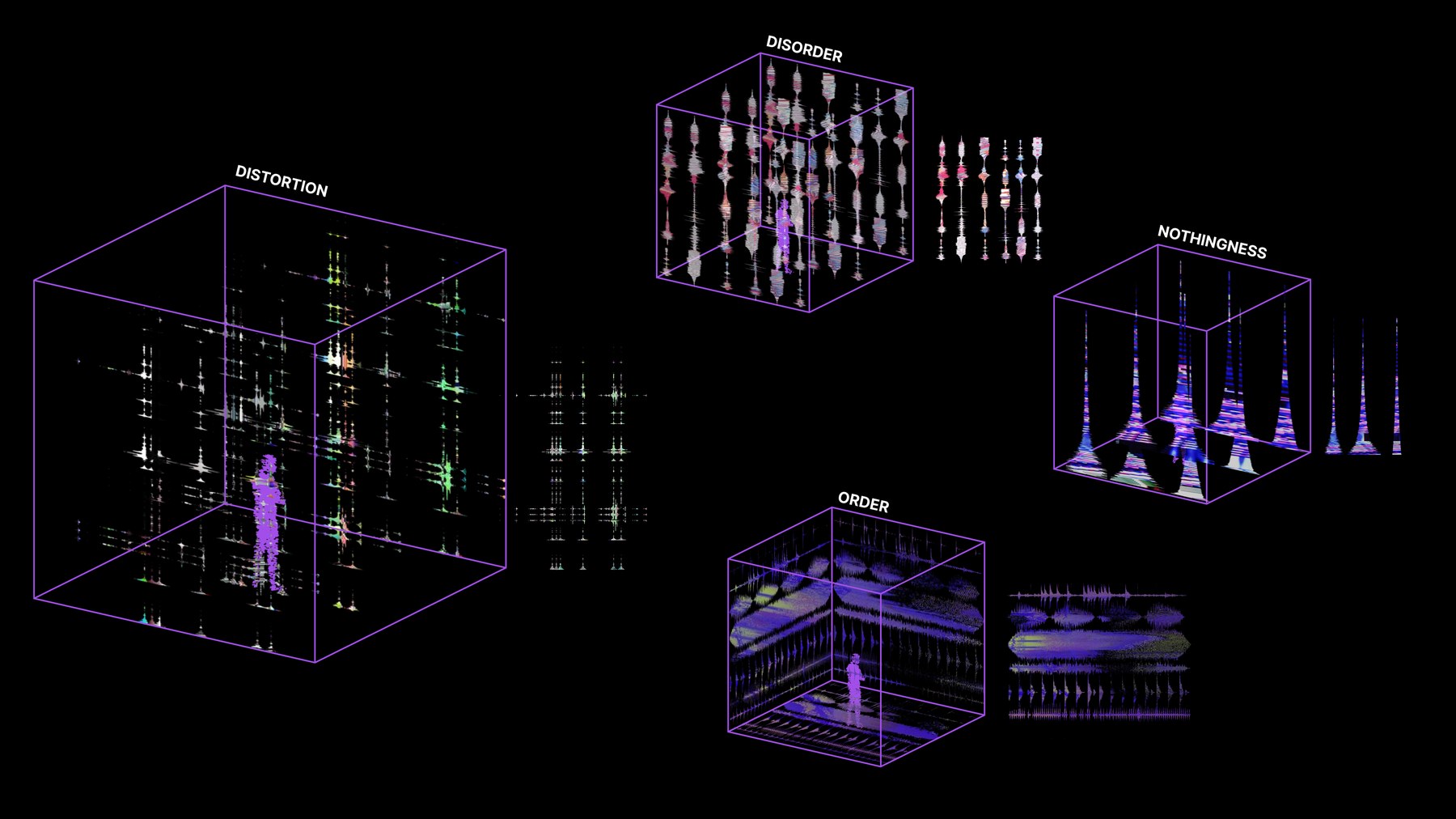
Distortion · Disorder · Nothingness · Order.
Keywords: sound perception · auditory illusion · data-driven art · spatial experience · interactive installation