Commodity Fetishism
2024 · physical computing, interface design, immersive installation
Materialism is such a common phenomenon that we've stopped seeing it. So I made it strange again: I built a temple, and asked people to worship in it.
The project combines conceptual analysis, interviews, 3D modelling and a physical installation — pairing virtual and physical space so that visitors don't read about commodity worship, they perform it.
The idea it comes from
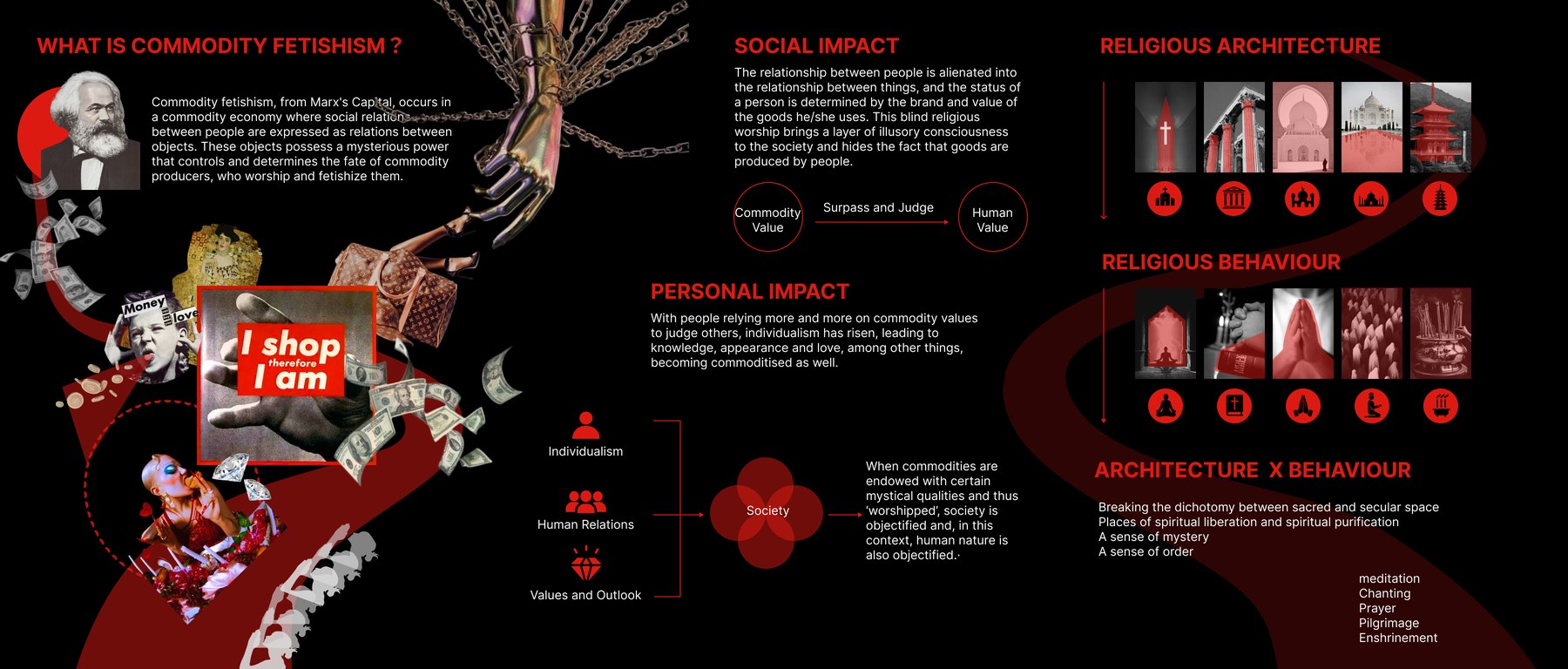
Commodity fetishism, from Marx's Capital, describes an economy where relations between people take the form of relations between things — objects acquire a mysterious power over the people who made them.
Two consequences interested me. Socially, a person's status gets decided by the brand and value of what they use; this worship lays a layer of illusory consciousness over society and hides the fact that goods are made by people. Personally, as we judge each other by commodity values, knowledge, appearance and even love become commodities too.
So I studied the thing this behaviour already resembles: religion. Its architecture — church, temple, mosque, pagoda — and its behaviours — meditation, chanting, prayer, pilgrimage, enshrinement. Both break the line between sacred and secular space. Both promise purification. Both run on mystery and order.
Talking to believers
I interviewed three friends about what they buy and why.
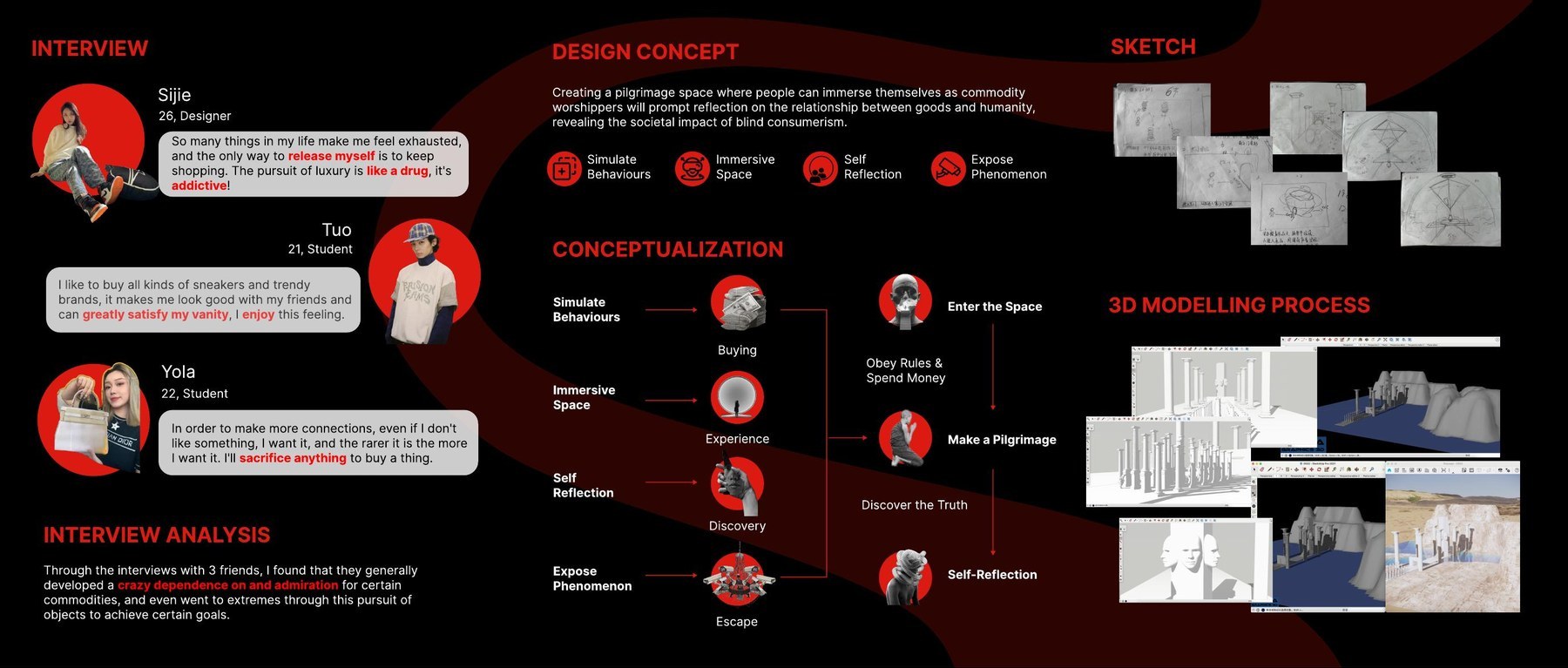
"So many things in my life make me feel exhausted, and the only way to release myself is to keep shopping. The pursuit of luxury is like a drug, it's addictive!" — Sijie, 26, designer
"I like to buy all kinds of sneakers and trendy brands, it makes me look good with my friends and can greatly satisfy my vanity. I enjoy this feeling." — Tuo, 21, student
"In order to make more connections, even if I don't like something, I want it — and the rarer it is the more I want it. I'll sacrifice anything to buy a thing." — Yola, 22, student
All three had developed a genuine dependence on and admiration for certain objects, and would go to extremes through them to reach some other goal. That is devotion. It just doesn't call itself that.
The concept followed from there: create a pilgrimage space where people immerse themselves as commodity worshippers, and let the experience — not an argument — prompt the reflection. Four moves: simulate the behaviours, build an immersive space, provoke self-reflection, expose the phenomenon. Buying, experience, discovery, escape.
Three rooms
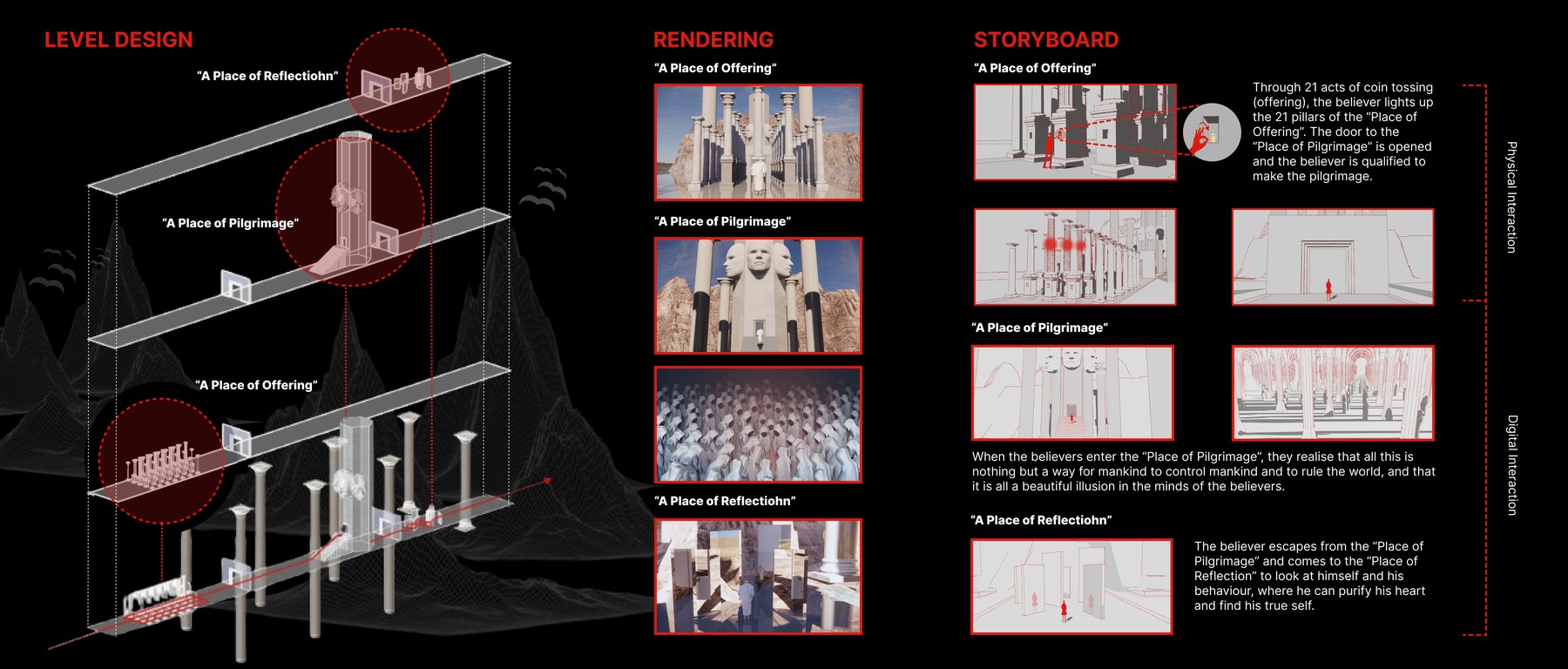
The space is a route through three levels, each one a stage of belief.
A Place of Offering. Through 21 acts of coin tossing, the believer lights up 21 pillars. Only then does the door open, and only then is she qualified to make the pilgrimage.
A Place of Pilgrimage. Inside, among endless identical figures, the believer realises this is nothing but a way for humans to control humans — a beautiful illusion held in the minds of believers.
A Place of Reflection. She escapes into a room of mirrors, to look at herself and at her own behaviour, and to find whatever is left underneath it.
Making it real
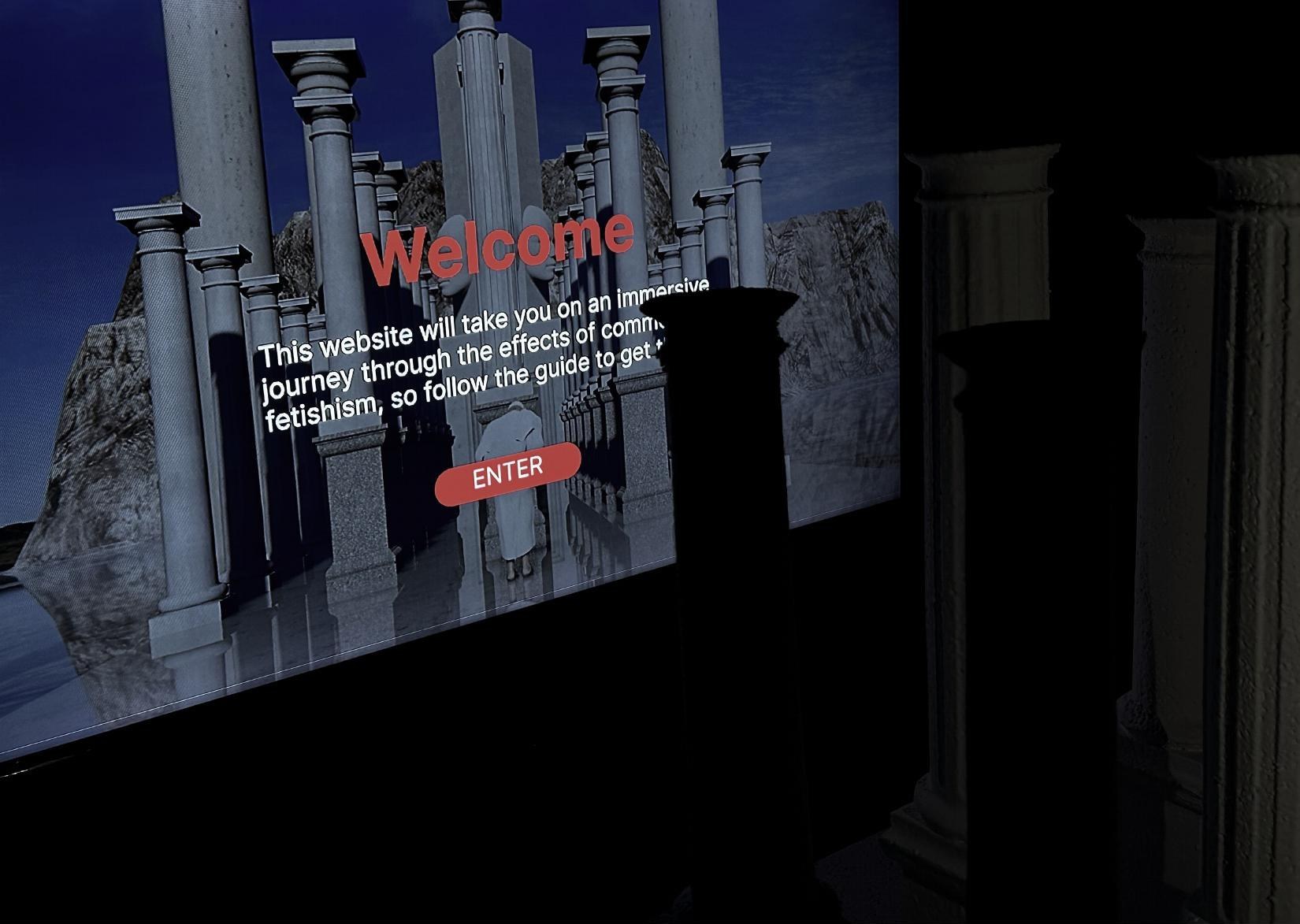
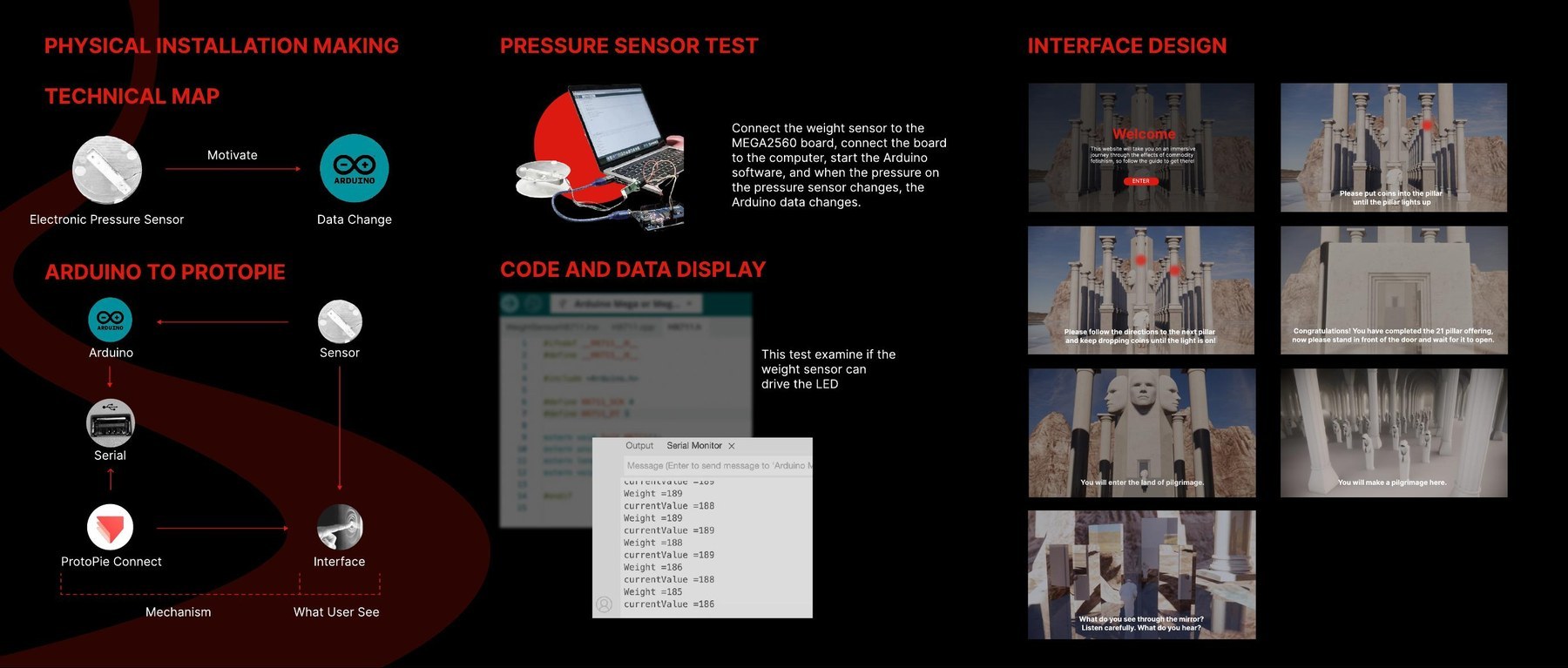
The physical half is a set of pillars with pressure sensors underneath and LEDs inside, wired to an Arduino MEGA2560 and bridged into the interface through ProtoPie Connect. Drop enough coins into a pillar and the weight sensor trips; the pillar lights red, and the screen answers.
The mechanism is deliberately crude — coins, foam, a sensor, a light. That crudeness is the point: the entire ritual runs on a scale.
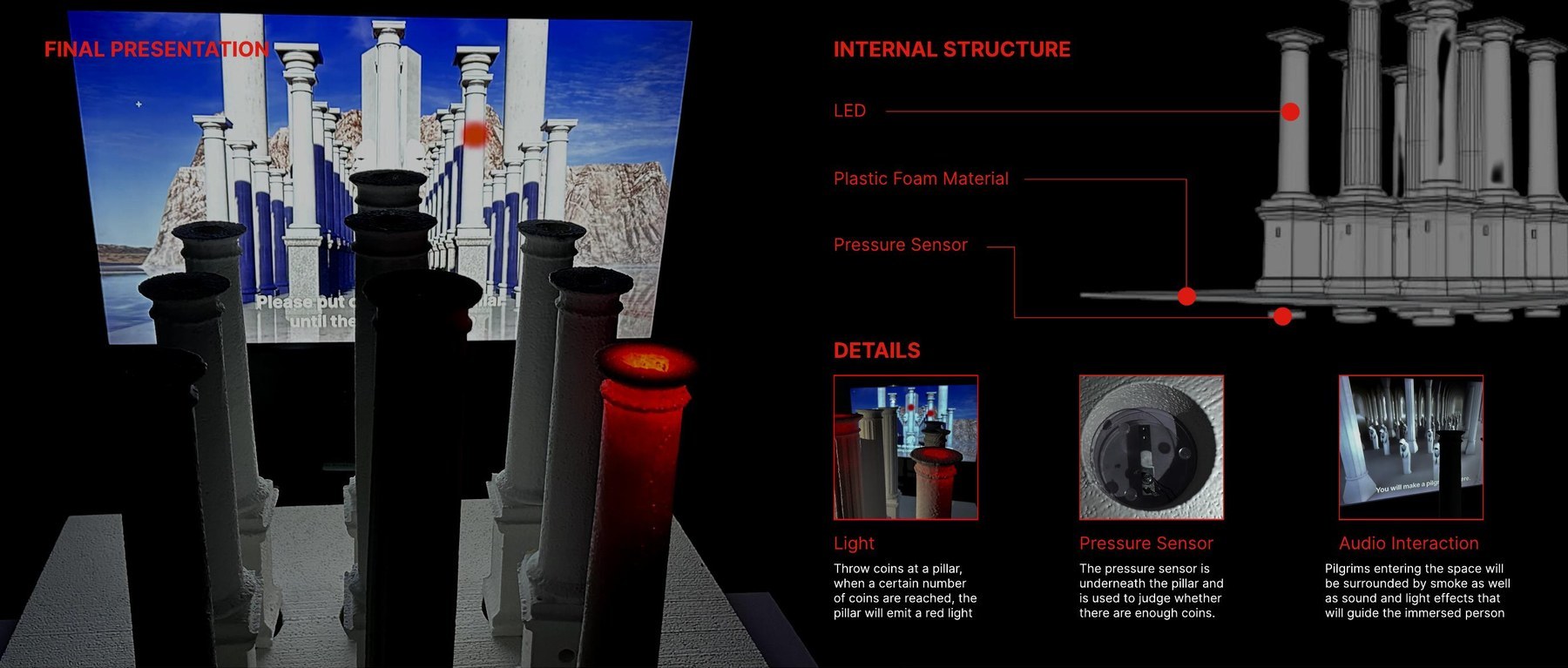
Light, pressure sensor, audio — pilgrims entering the space are surrounded by smoke, sound and light that guide them deeper in.