City Neuron
2019 · Beijing · urban research, landscape strategy, branding, app design
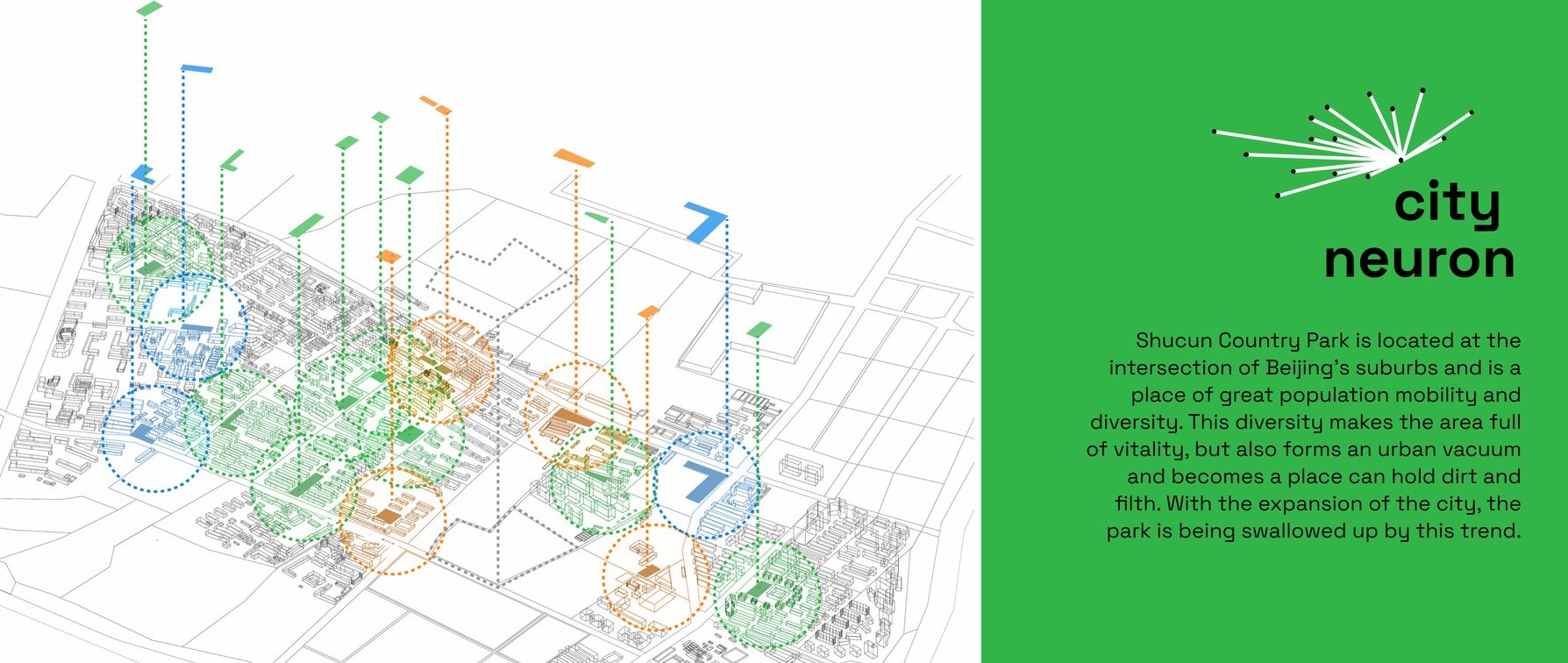
Shucun Country Park sits where Beijing's suburbs meet the city. The mix of people passing through makes it lively — and also makes it an urban vacuum, a place that collects dirt and filth. As the city expands, the park is being swallowed.
My question wasn't how to save the park. It was: what if the park stopped being one place?
What happened to this park
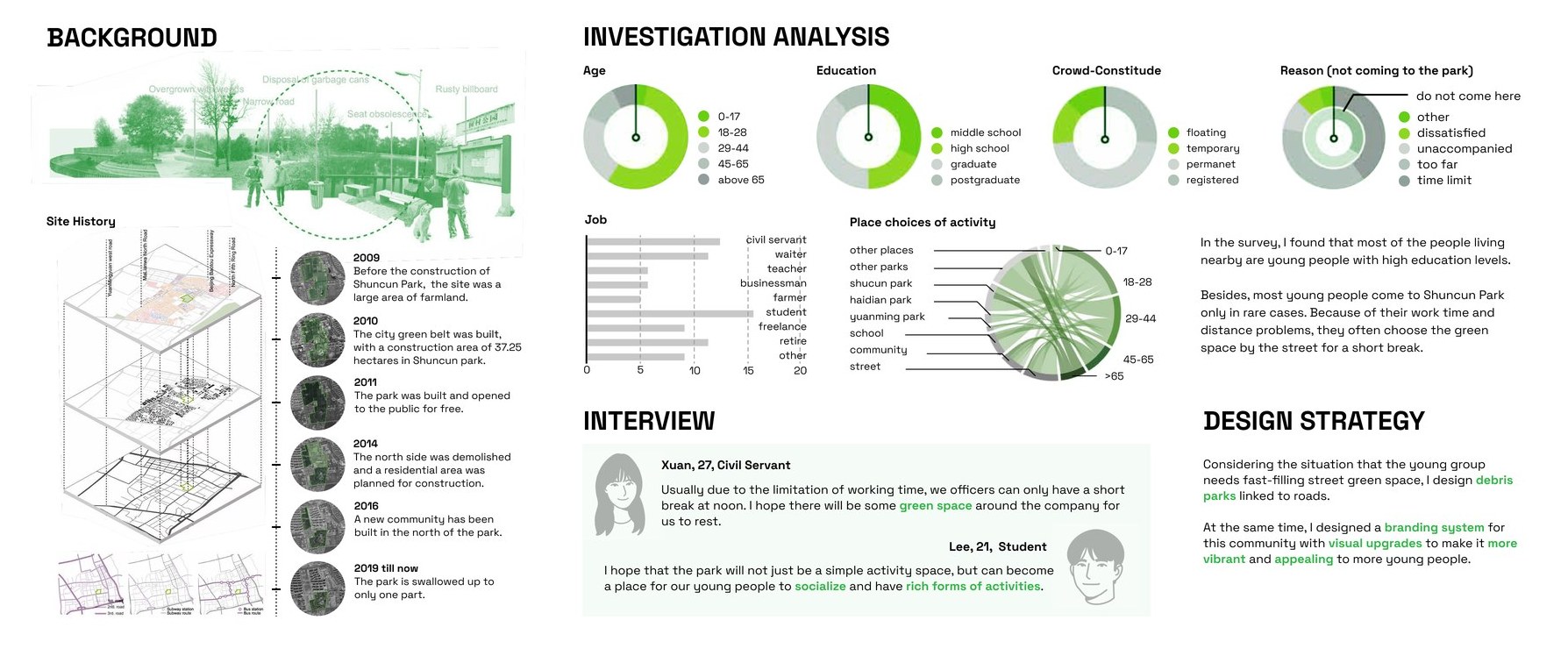
In 2009 the site was farmland. A city green belt arrived in 2010 — 37.25 hectares — and in 2011 the park opened to the public, free. Then the city caught up with it: the north side was demolished in 2014 for housing, a new community went up in 2016, and by 2019 the park had been eaten down to a single fragment.
I surveyed the people living around it. Most are young and highly educated — exactly the people a park like this should serve. Almost none of them go. Not because they don't want green space, but because of work hours and distance: they take their breaks in whatever strip of green happens to be on the street.
"Due to working hours, we can only take a short break at noon. I hope there's some green space near the company where we can rest." — Xuan, 27, civil servant
"I hope the park won't just be a simple activity space, but a place where young people can socialize, with richer kinds of activities." — Lee, 21, student
Reading the site
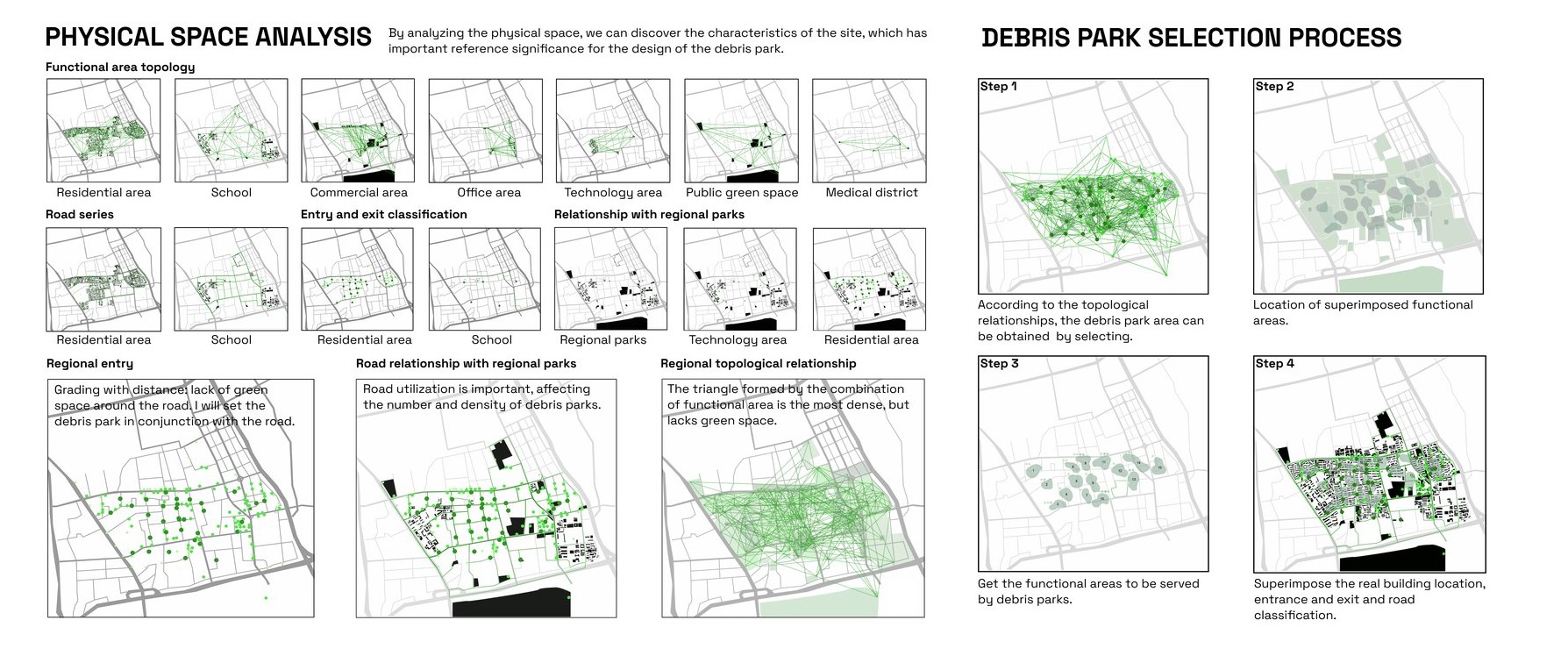
So I mapped the physical space to find where those short breaks actually happen: the topology of each functional area — residential, school, commercial, office, technology, public green, medical — plus the road network, entrances and exits, and each area's relationship to the regional parks.
Three things came out of it. Green space thins out along the roads, so the parks should attach to roads rather than hide behind them. Road usage should set how many parks there are and how densely they sit. And the triangle where the functional areas overlap is the densest part of the site — and the part with the least green.
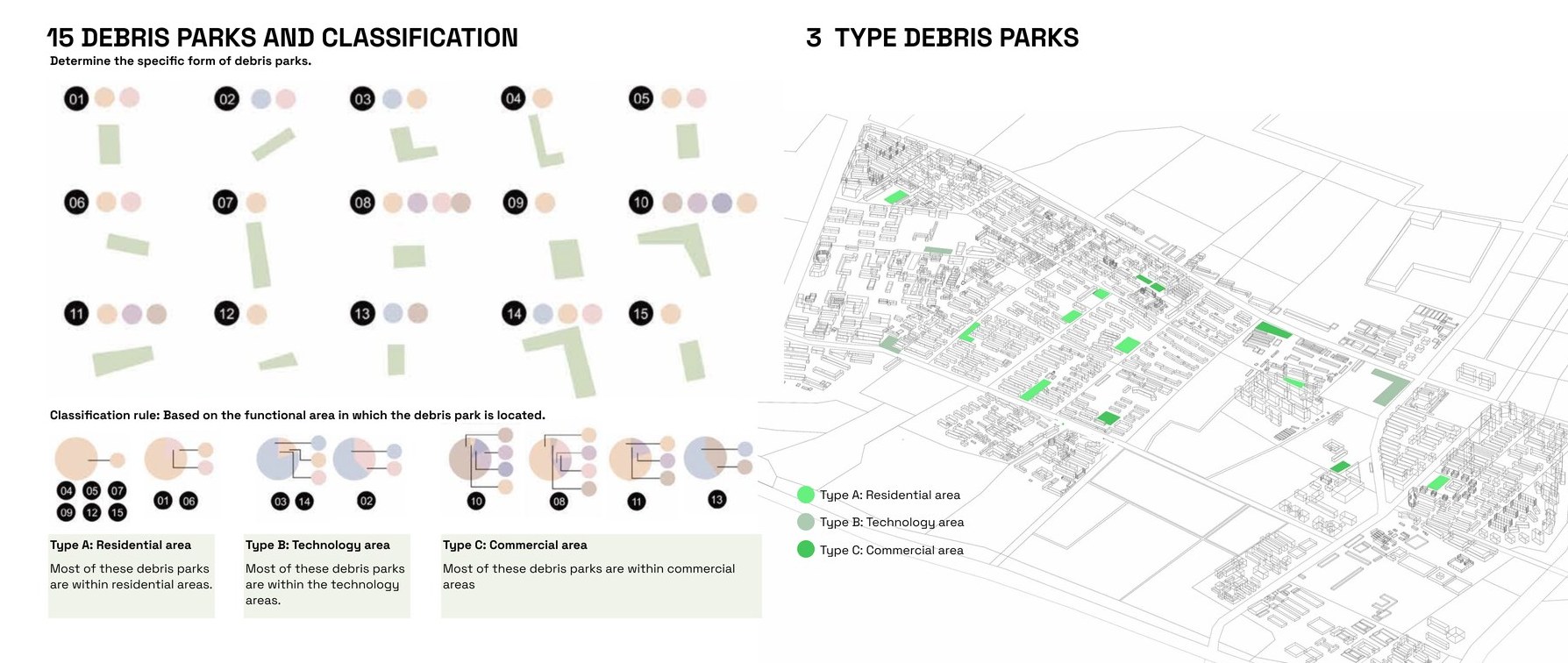
15 debris parks
Instead of one park, fifteen small ones scattered through the fabric — debris parks, sized and shaped by whatever gap they land in. Each takes its character from its surroundings: Type A in residential areas, Type B in the technology district, Type C in commercial ones. Small enough to pass through on a lunch break. Numerous enough to be unavoidable.
The brand
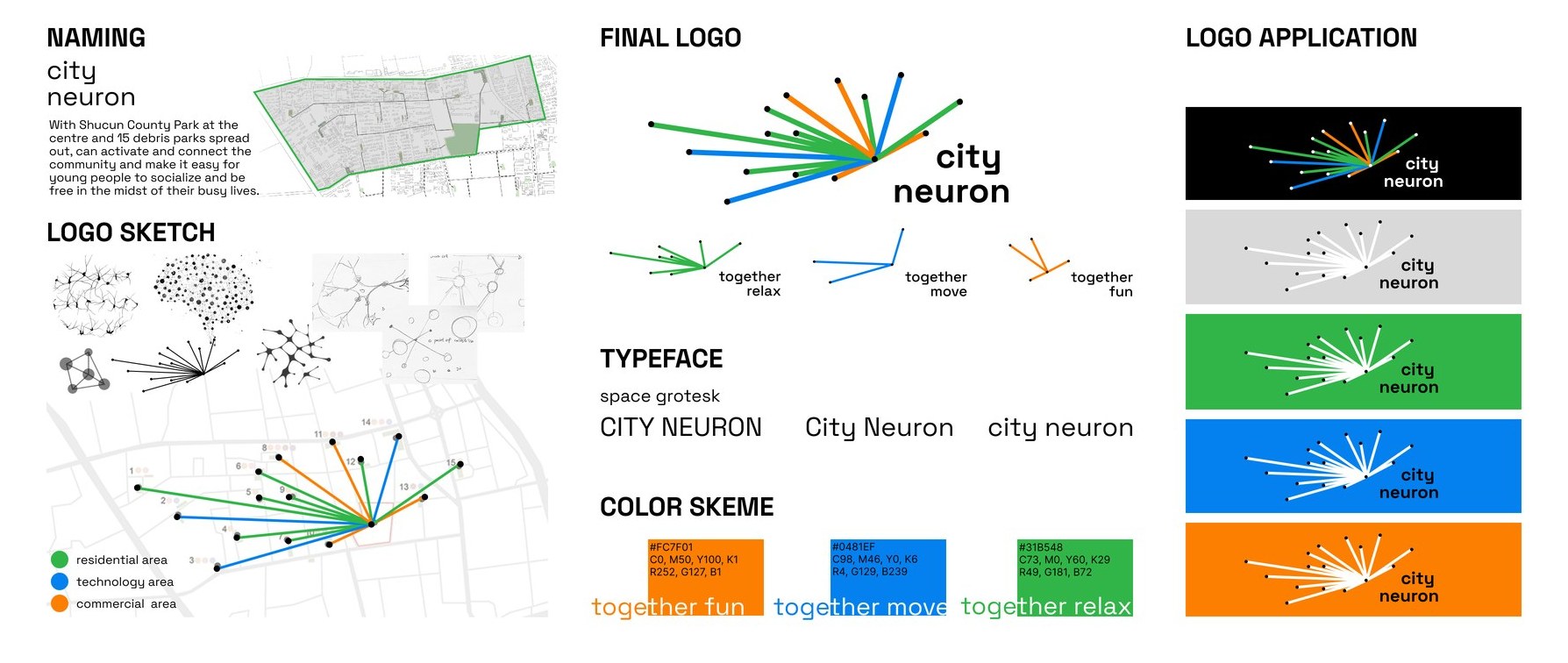
Fifteen scattered parks around one centre look like something specific: a neuron. Hence City Neuron — Shucun Park as the cell body, the debris parks as dendrites reaching into the community, and the whole thing built to help young people connect and breathe in the middle of busy lives.
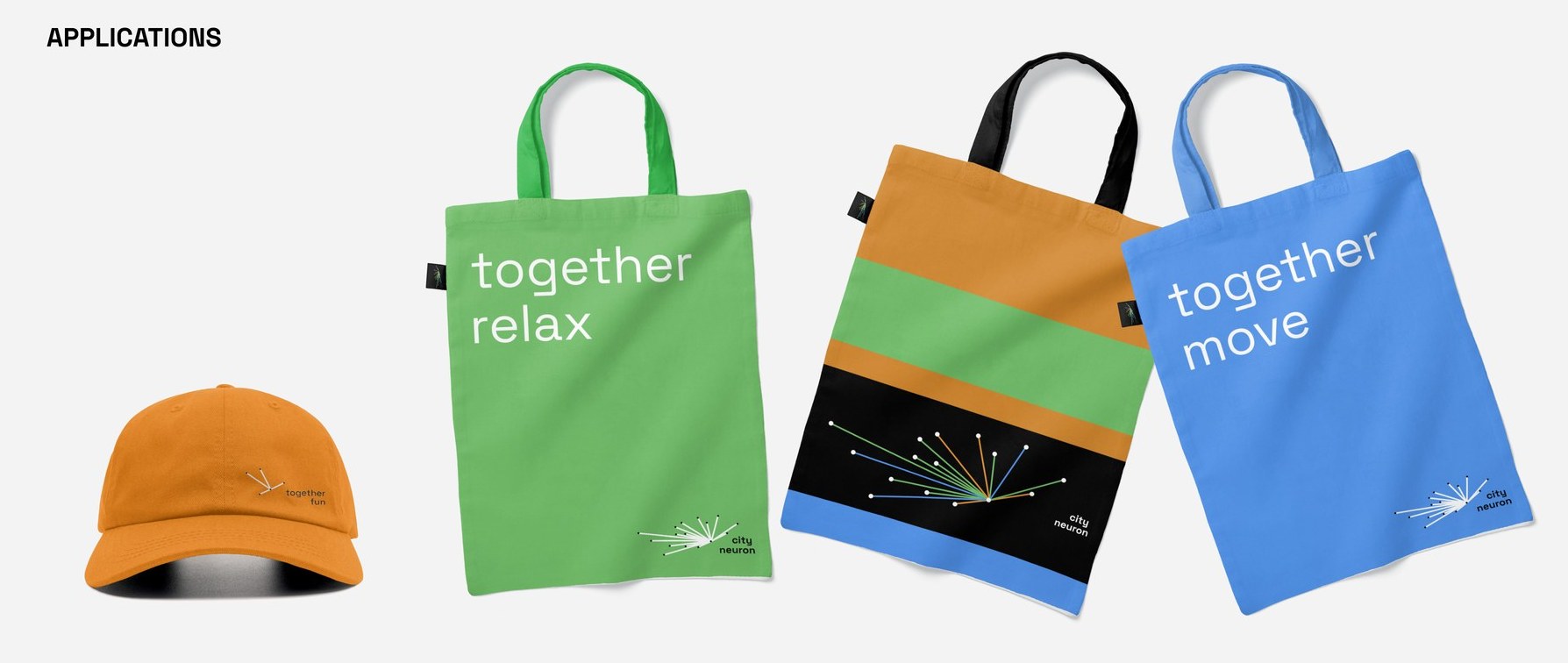
The identity runs on three colours tied to three invitations — together relax for residential green, together move for the technology district, together fun for commercial. Space Grotesk throughout.
Out in the city
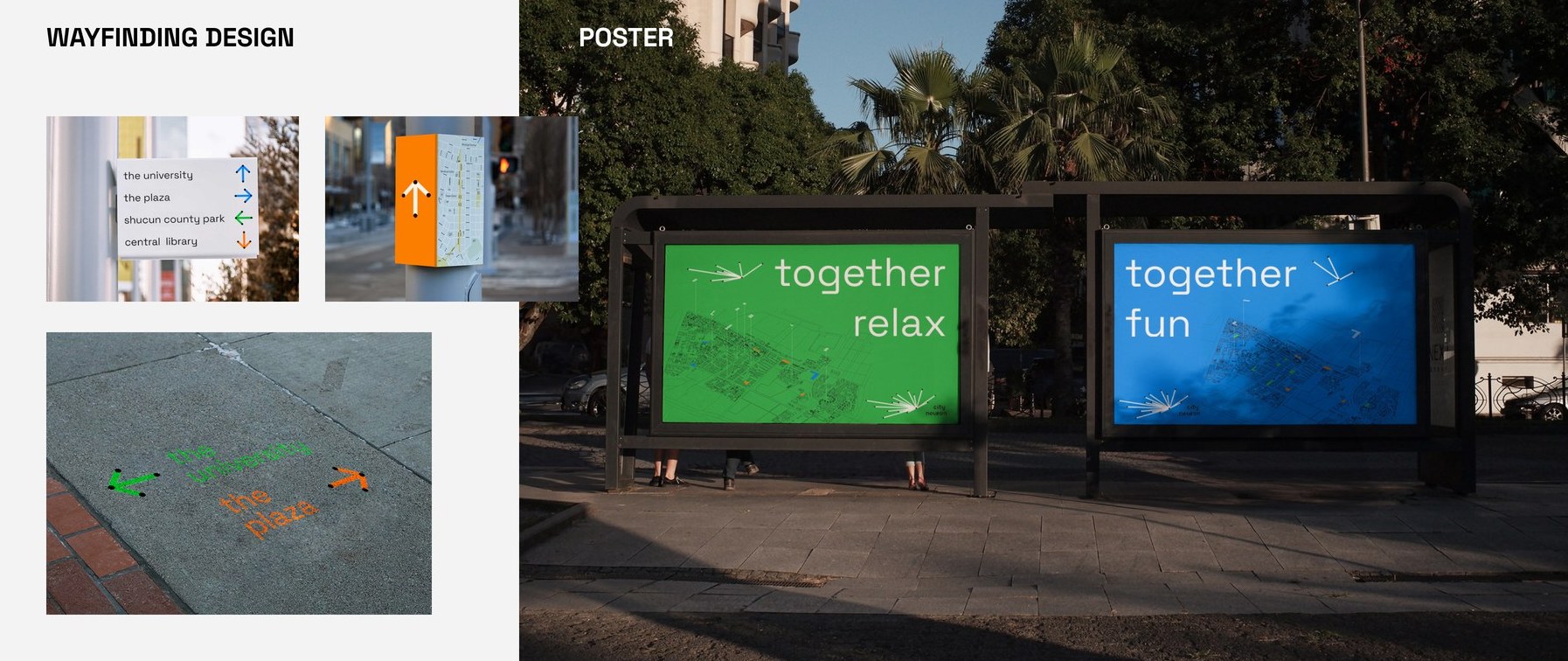
The system had to work at street level: wayfinding signs, street-corner maps, and directions painted straight onto the pavement, so the network announces itself to someone who wasn't looking for it.
And in the phone
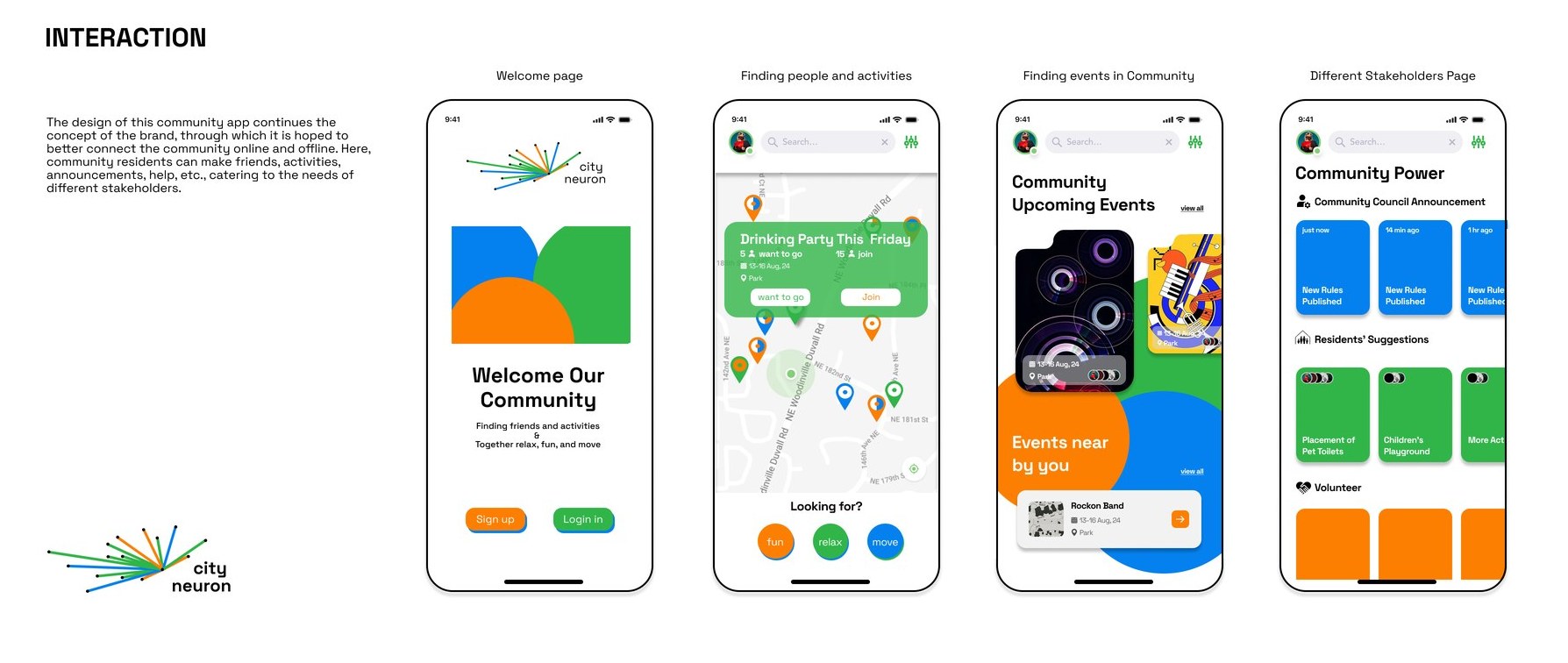
The last piece is a community app that carries the same idea online: residents find friends and activities near them, see what's happening in the community, post announcements, ask for help, and follow what the community council decides — each stakeholder gets their own view.